
What Causes Dog Diarrhea and Vomiting?
Dog diarrhea and vomiting together almost always trace back to one of a few common culprits:
- Dietary indiscretion – eating garbage, spoiled food, table scraps, or something they found on a walk
- Sudden diet changes – switching foods too quickly, or rich treats their gut isn’t used to
- Stress – boarding, travel, new pets, or changes at home can upset a dog’s stomach
- Infections – bacterial, viral, or parasitic infections such as giardia
- Intestinal parasites – worms and other parasites commonly cause both symptoms in puppies
- Toxins – household chemicals, human medications, or toxic plants
- Foreign objects or blockages – toys, socks, bones, or other swallowed items
- Pancreatitis – inflammation of the pancreas, often triggered by fatty foods, causing sudden vomiting and diarrhea together
Identifying the likely cause helps you (and your vet) decide how urgently your dog needs to be seen.
Dog Diarrhea and Vomiting Home Remedy
If your dog is otherwise a healthy adult, alert, and has only had a few mild episodes, you can try supportive home care for 12–24 hours. Try these steps individually, together, or in succession:
- Withhold food for 12–24 hours. This gives the digestive system a chance to rest and recover. Keep fresh water available throughout.
- Prevent dehydration, don’t force it. Don’t let your dog gulp a large bowl of water, as this can trigger more vomiting. Offer small, frequent sips, or a pet-safe electrolyte solution.
- Reintroduce a bland diet gradually. After the fasting period, offer small portions of boiled, unseasoned white meat chicken (no skin or bones) mixed with plain white rice. Avoid fatty, salty, or spicy foods.
- Consider a probiotic. A pet-safe probiotic supplement can help restore healthy gut bacteria once your dog is keeping food down.
- Monitor closely. Watch your dog’s energy, appetite, and stool over the next 24–48 hours. If there’s no improvement, or symptoms get worse, it’s time to call a vet.
Never give your dog over-the-counter human medications like Imodium without checking with a vet first. Some are unsafe for dogs or can mask a more serious problem.
When Should I Take My Dog to the Vet for Diarrhea and Vomiting?
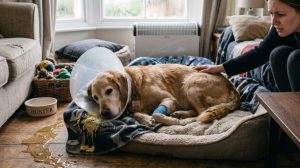
Home care is only appropriate for mild, short-lived episodes in an otherwise healthy dog. Head to a vet clinic or emergency vet right away if your dog shows any of the following:
- Blood in vomit or stool – including stool that looks dark or tarry
- Lethargy, weakness, collapse, or shaking
- Pale gums
- A swollen, hard, or painful abdomen
- Repeated attempts to vomit with nothing coming up, a major warning sign of bloat, which can be fatal within hours
- Refusing water or unable to keep any water down
- Signs of dehydration – dry or sticky gums, sunken eyes, or skin that stays “tented” when gently pinched
- A high fever
- Vomiting or diarrhea lasting more than 24–48 hours
Puppies, senior dogs, and dogs with existing health conditions (like diabetes or kidney disease) should be seen sooner, since they dehydrate and decline much faster than a healthy adult dog.
Frequently Asked Questions
What should I give my dog that has diarrhea and vomiting? For a mild case, withhold food for 12–24 hours while offering small sips of water, then reintroduce a bland diet of boiled chicken and plain rice in small portions. A vet-approved probiotic can help, but avoid giving human medication unless your vet has specifically told you it’s safe for your dog.
How long should I wait to take my dog to the vet for vomiting and diarrhea? If your dog is otherwise acting normal, 24–48 hours of monitoring at home is usually reasonable. If symptoms haven’t improved by then, worsen at any point, or your dog shows any of the emergency signs above, don’t wait, see a vet the same day.
What would cause a dog to throw up and have diarrhea at the same time? The most common causes are dietary indiscretion (eating something they shouldn’t have), a sudden food change, intestinal parasites, or a viral or bacterial infection. Less commonly, it can signal pancreatitis, a foreign object blockage, or toxin ingestion, which is why persistent or severe cases need a vet exam.
What food will firm up dog poop? A bland, low-fat diet of boiled white meat chicken and plain white rice is the standard short-term fix, since it’s gentle and easy to digest. Adding a spoonful of plain canned pumpkin can also help firm up stool for some dogs. If loose stool continues past a couple of days, it’s worth having your vet check for an underlying cause rather than managing it with diet alone.
Visit Honnas Veterinary in Austin, TX
If you’re local to Austin and your dog’s diarrhea or vomiting isn’t improving, or shows any of the emergency warning signs above, contact us right away. Our vet clinic and animal hospital are open 7 days a week from 8am to 7pm, with emergency vets on hand every day, in-house diagnostics, and a full pet pharmacy on site.
Final Thoughts
Treating mild dog diarrhea and vomiting at home with fasting, hydration, and a bland diet works well for many cases. But close monitoring matters: blood in the vomit or stool, lethargy, a painful belly, or symptoms lasting more than a day or two all mean it’s time to stop the home remedy and get your dog checked out.
If you have any concerns about your dog’s symptoms, don’t hesitate to reach out to your local veterinarian in Austin, TX. We’re here to help your four-legged friend feel better, fast.
New patients receive a free first exam. Call 512-518-5674 or book online any day of the week, 8am–7pm.