

If your dog is limping on its front leg, it’s natural to feel concerned. Because dogs carry roughly 60% of their body weight on their front legs, even a mild limp can signal something worth addressing promptly. Whether your dog suddenly started limping on its front leg or the limp has developed gradually, understanding the likely cause helps you respond appropriately and protect your dog’s long-term mobility.
Why Is My Dog Limping on Its Front Leg?
Front leg limping usually points to pain or discomfort somewhere along the paw, wrist, elbow, or shoulder. It can show up in either leg, whether your dog is limping on the front right leg or the front left leg, and can appear suddenly after activity or gradually over time in older dogs. The cause and the correct response depend heavily on what else is going on, so it helps to understand the most common reasons first.
Common Causes of Front Leg Limping in Dogs
1. Injuries
Sprains, strains, fractures, or cuts from overexertion, rough play, or a fall are among the most common reasons a dog suddenly starts limping on its front leg. This includes limping that appears right after running, jumping off furniture, or playing hard at the park. These often require illness and injury management from a professional.
2. Arthritis
Arthritis is one of the leading causes of front leg limping in older and senior dogs. It causes pain and stiffness in the joints that tends to be worse after rest, which is why many owners notice their dog limping after sleeping, waking up limping, or limping after laying down for a while. Stiffness typically improves slightly with gentle movement as the joint warms up.
3. Soft Tissue Injuries
Ligament tears and muscle strains can cause limping that ranges from mild to severe. These injuries are not always visible and are easy to miss without a proper exam, which is one reason a dog can be limping on its front leg with no visible injury on the surface.
4. Foreign Objects
Thorns, splinters, or small pieces of debris lodged between the paw pads are a frequent cause of sudden limping. Always check the paws carefully after outdoor walks, especially in wooded or grassy areas.
5. Infections
Infections in the paw or joints cause swelling and pain that can worsen quickly if left untreated. If you notice a front leg that’s swollen and limping together, an infection or abscess is worth ruling out. Severe cases may require care at an animal hospital.
6. Neurological Disorders
Conditions affecting the nerves can produce limping or an unusual gait and typically require diagnostic evaluation at a vet clinic.
7. Shoulder Injuries
Shoulder instability, dislocation, or soft tissue damage in the shoulder can cause a limp that looks like it’s coming from lower in the leg. This is worth mentioning specifically because shoulder-related limping is often mistaken for a paw or wrist issue and can be easy to overlook without a hands-on exam.
Dog Limping Front Leg With No Pain or Swelling: What It Might Mean
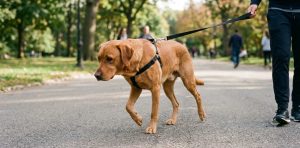
If your dog is limping on its front leg but shows no obvious pain or swelling, a minor muscle strain or soft tissue injury is the most likely cause. This is also common in dogs limping on their front leg but still running or playing normally otherwise, which often points to a mild, intermittent issue rather than a major one. These cases often resolve with 24 to 48 hours of restricted activity. That said, the absence of visible symptoms does not rule out internal joint issues or early arthritis, particularly in older dogs. If the limp persists beyond two days, comes and goes randomly, or your dog is not acting like they’re in pain but the limp continues, a veterinary exam is the right next step.
What to Do If Your Dog Is Limping on Its Front Leg
For mild limping where your dog is still bearing some weight, you can take these steps at home while monitoring the situation.
Restrict activity: Keep your dog calm and limit movement to gentle leash walks. Restrict access to stairs and stop any running or jumping until you understand what’s going on.
Check the paw: Gently examine between the paw pads for foreign objects such as thorns, glass, or pebbles. Look for cracked nails, cuts, or any swelling around the toes.
Feel the leg: Carefully run your hand along the leg, from shoulder to paw, feeling for heat, swelling, or any spot that causes your dog to react when touched.
Apply a cold compress: A bag of frozen vegetables wrapped in a towel applied for 10 to 15 minutes at a time can reduce swelling and ease discomfort in the first 24 hours.
Clean any wounds: If you find cuts or abrasions, clean them with an antiseptic solution and keep them covered to prevent infection.
Avoid human medication: Never give human painkillers like ibuprofen or acetaminophen. Both are toxic to dogs, even in small amounts, and can cause serious harm on top of whatever caused the limp in the first place.
Consider joint supplements: For older dogs with recurring stiffness, glucosamine and chondroitin supplements may help with mild pain and inflammation. Always confirm with your vet before adding anything new.
When to Contact Your Veterinarian
Home monitoring has its limits. Contact Honnas Veterinary right away, or use our emergency vet service, if you notice any of the following:
- Your dog is holding the leg up completely and refusing to put any weight on it
- The leg or paw is held at an unnatural angle, or appears dislocated at the shoulder
- There is heavy panting, whimpering, or obvious signs of severe pain
- Swelling, bleeding, or a visible wound is present
- The limp has not improved after 24 to 48 hours of rest
- Lethargy, loss of appetite, or behavioral changes accompany the limping
Visible injuries or suspected fractures may require veterinary surgery depending on severity. A vet exam may also include X-rays to rule out bone or joint damage that isn’t visible from the outside, or an ultrasound to check for internal injuries to soft tissue and organs.
Frequently Asked Questions
How do you treat a dog’s front leg limping?
Start by restricting activity, gently checking the paw and leg for wounds or foreign objects, and applying a cold compress for the first 24 hours. Never give human pain medication. If the limp doesn’t improve within a day or two, or if there’s visible swelling, bleeding, or an inability to bear weight, see a veterinarian rather than continuing to treat it at home.
How can I tell if my dog’s limp is serious?
A limp is more likely to be serious if your dog refuses to put any weight on the leg, the limb looks misshapen or is dangling, there’s significant swelling or bleeding, or your dog cries out when the leg is touched. Limping paired with lethargy, fever, or loss of appetite is also a sign to seek care right away rather than waiting it out.
How do I know if my dog sprained his front leg?
A sprain typically causes your dog to favor the leg without holding it completely off the ground, along with mild swelling or warmth around a joint when you feel along the limb. Sprains usually improve somewhat with rest, but since sprains, strains, and more serious injuries can look similar in the first day, a vet exam is the only reliable way to tell them apart.
Can a dog’s limp heal on its own?
A mild strain or minor soft tissue injury can sometimes improve on its own with 24 to 48 hours of strict rest. However, limping that persists, worsens, or comes with swelling, visible injury, or behavior changes needs veterinary attention, since untreated joint or ligament damage can lead to longer-term mobility problems.
Keeping Your Dog’s Legs and Joints Healthy
Routine wellness visits help catch early signs of joint disease or injury before they become serious problems. For older dogs or breeds prone to joint issues, ask your veterinarian in Austin about a joint support plan tailored to their needs. Staying current on pet vaccinations also helps prevent infections that can spread to joints and soft tissue.
Final Thoughts
A dog limping on its front leg is not something to brush off, whether it’s the front right leg, the front left leg, a small dog or a senior dog. Whether it turns out to be a minor paw irritation or something that needs professional treatment, early attention leads to better outcomes. If your dog is still limping after a day or two of rest, or if any of the red flags above apply, reach out to the team at Honnas Veterinary for expert, compassionate care in Austin, TX.